
Frequently Asked Questions
No need to dig for answers

You’ve got questions. I’ve got answers.
Whether you're figuring out if Cued Canines is the right fit, curious about how training with me works, or wondering what kind of support your dog needs, you're in the right spot. This FAQ section covers some of the most common things dog guardians ask me, so you can feel more confident about what’s next.
Frequently Asked Questions
Choose a category:
General Questions
Puppy Training Questions
Dog Training Questions
Behaviour Help Questions
Is positive reinforcement just giving my dog treats forever?

Food jump-starts learning because it taps into primal “yay!” responses. Over time, we layer in real-life rewards (sniff breaks, toy tosses, access to favourite spots) so treats fade but the behaviour sticks. You’ll always reinforce good choices, just not always from a treat pouch.
Why do some trainers use punishment or “balanced” methods, and you don’t?
Because the science is clear: dogs learn best through positive reinforcement, not fear. We want your dog to feel safe, not scared. We teach them what to do, instead of punishing them for getting it wrong. That’s how you get behaviours that last and a relationship built on trust, not tension.
How do I know this will actually work for my dog?
I tailor the plan to your dog’s personality, learning style, and environment, so it’s not one-size-fits-all. Whether you’ve got an adolescent with selective hearing, an anxious new rescue, or a wild-child puppy, we’ll adjust the pace and exercises to meet them where they are.
What if I’m the problem, not my dog?
I hear this a lot, and the answer is: you’re not the problem! You’re human. You’re doing your best with the knowledge you have. My job is to give you better tools, more clarity, and ongoing support. Not blame. We’re a team, and your effort does make a difference.
Is now the right time to start training?
If you’re asking the question, you’re probably ready. Whether you’re in the thick of a new puppy whirlwind or feeling stuck with a long-standing challenge, training can bring relief, structure, and hope. And we’ll make it as doable and, dare I say, enjoyable as possible.
This feels like a big investment. Is it really worth it?
I hear you! Committing time and money to training can feel like a leap. But what you’re really investing in is relief, clarity, and a stronger bond with your dog. Whether it’s fewer stressful walks, smoother daily routines, or knowing how to help your dog through tough moments, training gives you tools you’ll use for years to come.
Do you offer payment plans?
Yes! I'm happy to chat about options and find a plan that works for you, so you can get the support you need without financial overwhelm.
Do I need to use a Clicker?
Only if you want to! Clickers are great for precision and timing, but they’re just one tool in the positive reinforcement toolbox. The goal is clear communication, not fancy gadgets. We'll adapt to what feels right for you.
Can my family participate in the training sessions?

Definitely! I encourage everyone in the household to be involved in the training process. This helps ensure consistency in how your dog is being taught and reinforces the behaviours you want to see.
That said, if you have younger children, I recommend having one adult focus on supervising the kids while another adult works directly with the dog during training sessions. This keeps everyone safe and allows you to get the most out of the time we have together.
What does a typical puppy coaching session look like?
All puppy coaching sessions are 60 minutes long. We start with a quick check-in on your wins and struggles, then dive into two to three focused training games. You’ll get hands-on coaching, real-time troubleshooting, and tailored homework so you’re never left wondering “Wait, how did we do that?”
What skills will we cover in puppy training?
We’ll cover all the essentials: potty training, play biting, crate and alone-time confidence, socialization, handling, basic cues like sit, down, and come when called, and most importantly, how to raise a confident, well-adjusted dog who enjoys learning with you. Training goes beyond “obedience” and focuses on real-life readiness.
What makes your puppy training different?
We don’t just teach “sit” and “stay”. My approach is about building your puppy’s emotional resilience, confidence, and life skills while helping you feel capable and supported. Training is tailored to your pace, your home, and your goals, so you’re not left guessing what to do next.
Can my kids or other family members join the training?
Yes please! We love getting the whole household involved. Everyone plays a role in raising a puppy, so I’ll make sure each family member understands how to support the training in a way that’s fun, safe, and consistent.
That said, if you have younger children, I recommend having one adult focus on supervising the kids while another adult works directly with the dog during training sessions. This keeps everyone safe and allows you to get the most out of the time we have together.
What’s my time commitment between sessions?
Think micro sessions: 3-5 minutes, a few times a day, woven into normal routines (potty trips, meal prep, play breaks). Consistency beats length every time, and I’ll design practice schedules that fit real life, not a fantasy calendar.
What if I’m totally overwhelmed? Where do we even begin?
First, breathe. Our first session prioritizes the biggest pain points (often potty accidents, nipping, endless zoomies). Then I create a simple, step-by-step plan so you know exactly what to practice each day (no more guesswork or endless Googling). I’ve got you.
I’m overwhelmed with my new puppy. Is this normal?
Totally. Puppies are adorable, but they’re also a lot. The constant supervision, the potty accidents, the biting, the sleep deprivation... it’s no wonder so many people experience the “puppy blues”. You’re not doing anything wrong. This stage is genuinely tough, and you’re not alone in feeling overwhelmed.
But here’s the good news: it does get easier. The chaos settles, the routines click into place, and one day you look at your dog and think, “Wow! We really did it.” My job is to guide you through the chaos with practical routines, simple training steps, and a whole lot of encouragement. Because while the early days are intense, the bond you’re building is 100% worth it. You've got this! And I've got you.
My dog knows the basics but doesn’t always listen. Can you help?
Totally. Knowing a cue and responding to it reliably in real life are two very different things. We’ll strengthen your dog’s understanding and help you apply those skills where it matters: on walks, around guests, and in everyday life.
What kinds of skills do you teach in your dog training programs?
We focus on real-life skills like polite leash walking, coming when called, settling on a mat, and calmly greeting people. But it’s not just about the dog. I’ll also teach you how to understand your dog’s signals and set them up for success.
What if I’ve already tried training before?
That’s okay! A lot of my clients come to me after other methods didn’t stick. I’ll meet you where you’re at and find a new approach that works for your dog’s learning style and your daily routine.
My dog pulls like crazy on leash. Can you help?
Yes! Loose-leash walking is one of the most common struggles I address. I’ll teach you how to make walks more enjoyable—for both of you—with better leash mechanics, smart reinforcement, and games that build focus.
Can you help with recall? My dog ignores me.
Yes! A reliable recall doesn’t happen by accident. It’s a skill that takes time to build. I’ll show you how to become your dog’s favourite destination using fun, motivating games that make coming back the best option.
What if my dog listens at home but not in public?
That’s super common. Dogs need to learn how to generalize cues in different places. I’ll help you gradually build reliability in new environments using a clear, step-by-step process that keeps both of you set up for success.
Is my dog too old to learn?
Not at all. Adult and senior dogs are just as capable of learning new skills. In fact, older dogs often pick things up more quickly thanks to their maturity. You really can teach an old dog new tricks. And I’ll show you how.
My dog barks or lunges at people or dogs on walks. What do I do?
This is a very common issue. Leash reactivity is usually rooted in fear or frustration (or both!). I’ll help you decode your dog’s triggers, create space and safety, and teach your dog new habits using calm, consistent methods.
Will I need to change my dog’s daily routine?
Maybe a little. Because nothing changes if nothing changes. But don't worry: I’ll meet you where you’re at. Sometimes small changes to your dog’s rest schedule, environment, or enrichment can make a big difference. We’ll work together to build habits that fit your life and help your dog feel more regulated and ready to learn.
What if my dog’s behaviour is only a problem sometimes?
That’s totally normal. Most dogs aren’t “always” reactive or fearful. They’re often fine until something flips the switch. I’ll help you figure out what those triggers are, how to prevent things from escalating, and how to teach your dog better ways to cope when life gets tricky.
Do you use punishment to stop unwanted behaviours?
Nope. I don’t believe in punishing dogs for struggling. Unwanted behaviours are usually just symptoms. Your dog is trying to communicate something, and it’s our job to listen and teach new coping strategies. We use positive reinforcement, choice-based training, and behaviour modification techniques that help dogs feel safe, understood, and supported.
What if I’ve already tried other trainers and nothing worked?
That’s okay! I hear this quite often. Sometimes it’s not about trying harder, it’s about trying differently. My approach is gentle, science-informed, and focused on your individual dog, not generic protocols. If something didn’t work before, it doesn’t mean your dog can’t learn. It just means you haven’t found the right approach yet. And I'm here to help you do that.
Will I have to use a muzzle?
Sometimes, yes. But only when it helps keep everyone safe and reduces stress. I’ll teach you how to introduce a muzzle in a positive way so it becomes a safety tool your dog is comfortable wearing, not something to fear.
Can my dog ever be “normal”?
I don’t believe in “normal”. I believe in better. Better skills. Better communication. Better quality of life. With the right support, most dogs make amazing progress, even if they’ll always be a bit sensitive or quirky.
My dog seems anxious even at home. Can we work on that too?
Yes, I can absolutely help with things like chronic stress, restlessness, hypervigilance, and generalized anxiety. Often, these internal struggles are at the root of “unwanted” behaviours. We’ll help your dog feel safer and more relaxed in their everyday life, starting at home.
Will my dog always need management?
Many dogs make amazing progress with the right training plan, environment, and support. That said, some behaviours may need ongoing management, especially in high-stress situations. My job is to help you find the right balance: reducing your dog’s stress while building their skills and confidence.
My dog growled at someone. Does that mean they’re aggressive?
Not necessarily. Growling is just a form of communication. It’s your dog’s way of saying, “I’m uncomfortable.” While it might feel scary in the moment, it’s actually helpful information. I’ll help you understand what’s triggering that response and teach your dog safer, more appropriate ways to cope.
Will my dog need medication?
Medication can be a valuable part of behaviour treatment for some dogs, particularly when fear, anxiety, or stress is affecting their ability to cope, learn, or enjoy everyday life.
As your trainer, I don’t diagnose medical conditions or recommend specific medications. What I can do is let you know if I’m seeing behaviour that may warrant a conversation with your veterinarian, especially if I’m concerned that your dog’s overall welfare is being impacted.
Your vet can assess whether medication, further medical investigation, or another form of support is appropriate. In more complex cases, I may also suggest involving a veterinary behaviourist.
Medication is never a requirement for working with me, and any decisions about your dog’s medical care are made between you and your veterinary team.
Still More Questions?
I know choosing a trainer for you and your dog is a big decision, and it’s normal to have questions. If there’s something else on your mind, I'm just a message away.
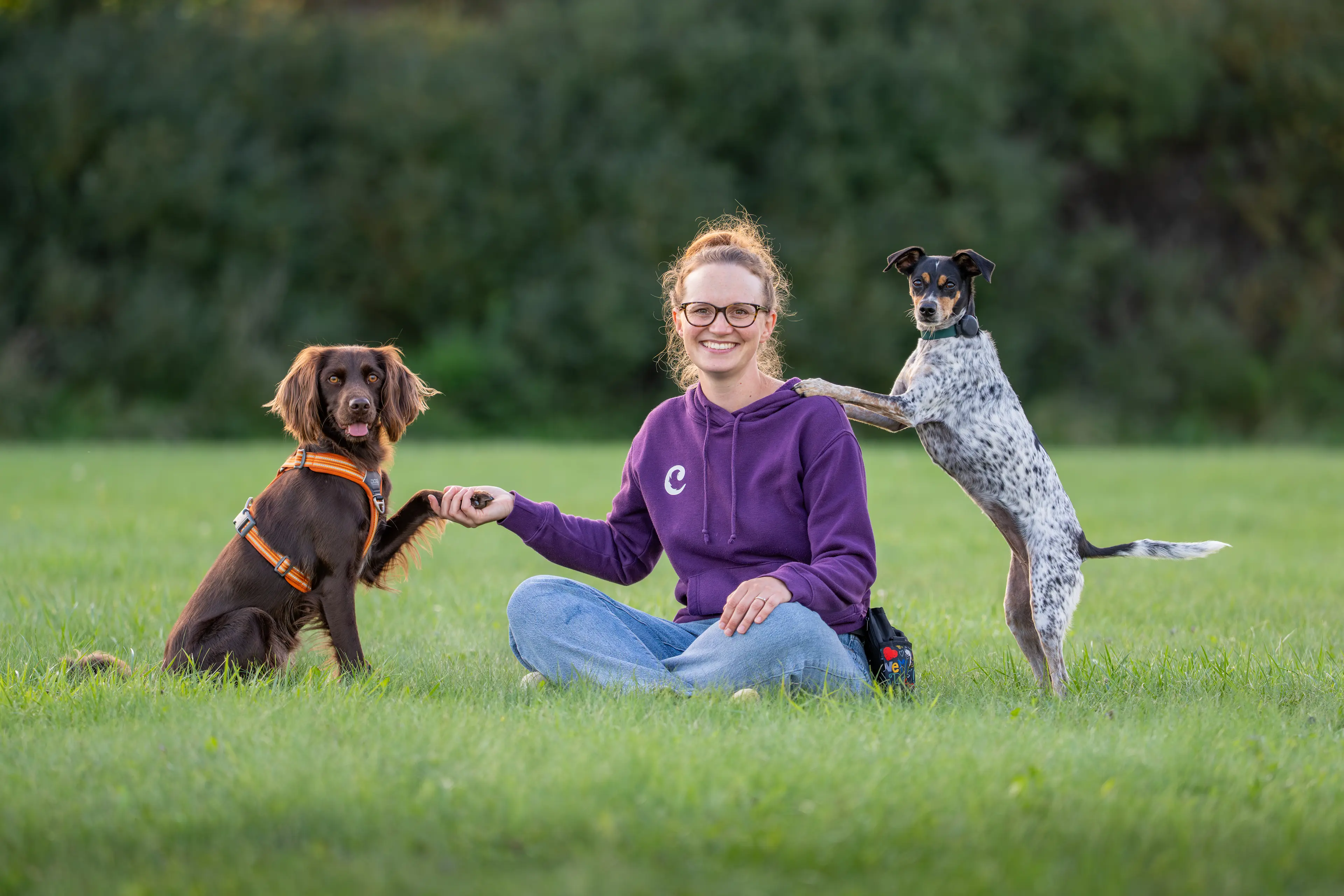
Let's Work Together
Cued Canines is happy to offer in-person training for clients located within a 25-minute drive of Alliston, ON. Live farther away? No problem! Our remote training options bring expert guidance right to your home.